Poland Demands NATO Strengthens Eastern Flank Air Defense After Missile Incident
The Polish Ministry of Defense insists on beefing up air defense and urges the Alliance to review response procedures to aerial threats following the border breach by Russian missiles and drones.
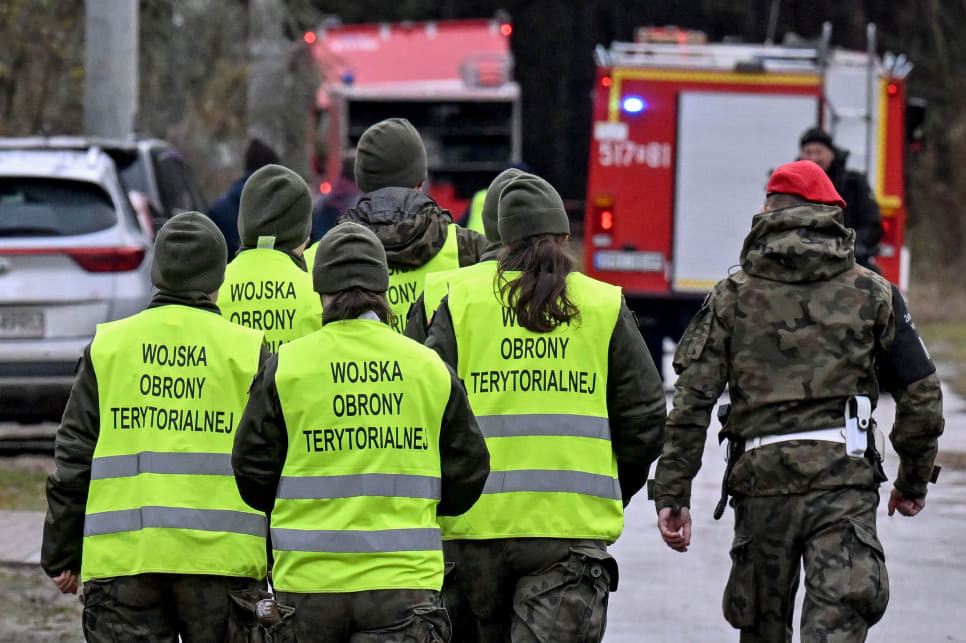 🇺🇦Ukraine
Photo: Ukrainska Pravda
Key points
- Poland demands NATO strengthen eastern flank air defense
- Article 4 will not be invoked, discussions held within the Alliance Council
- Warsaw requests additional AWACS planes and expanded pilot authority
- The incident occurred on November 20 due to Russian missiles and drones crossing the border
Events along the eastern borders of the European Union and NATO have once again drawn international attention due to an incident involving Russian projectiles entering Polish airspace. During massive shelling of neighboring Ukraine, a cruise missile and attack drones crossed into the neighboring country's territory, with wreckage subsequently discovered by specialized services in border voivodeships. Despite this, the Polish leadership decided against invoking Article 4 of the North Atlantic Treaty, which provides for formal consultations when a member's security is threatened, choosing instead to focus on practical measures during the NATO Council meeting in Brussels.
Demands on NATO and Security Enhancement Plans
Polish Deputy Minister of Defense Paweł Zalewski, before departing for the North Atlantic Council meeting, emphasized the need for a radical revision of approaches to eastern flank security. According to him, Warsaw expects not only political support from allies but also a genuine expansion of defense capabilities. This includes deploying additional AWACS early warning aircraft and engaging serious aviation assets to patrol and protect airspace.
Furthermore, the Polish side points to an urgent need to revise existing military protocols. Specifically, discussions are underway to grant NATO pilots the authority to make faster decisions on intercepting and shooting down dangerous objects. Notably, during the recent incident, a fighter pilot had permission to shoot down the Russian missile but failed to do so due to adverse weather conditions.
«NATO must strengthen the air defense of Poland and the eastern flank», — emphasized Deputy Minister of Defense Paweł Zalewski.
For residents of Ukrainian border regions who face daily enemy shelling, such incidents in neighboring countries demonstrate the cross-border nature of modern security risks. Although Shostka is located far from the Polish border, the pan-European discussion on strengthening air defense is vital for the region's entire security architecture, as bolstering the western borders of Ukraine and its neighbors indirectly impacts the stability of supply chains, the delivery of essential goods, and the humanitarian situation in the country.
Source Ukrainska Pravda — pravda.com.ua/news/2026/11/22/8064086/ ↗
Read next
 🚨Events
Court upholds detention of woman posing as medic during military facility blockade
The Kyiv Court of Appeal rejected the defense's appeal and upheld the pretrial detention for a woman suspected of orchestrating provocations at a National Guard site.
 🛡️Security
Estonia Considers Closing Rail Connection with Russia
Following the closure of road border checkpoints on December 1, Estonia may proceed to halt rail traffic across the border with Russia.
 🚨Events
Case of 'pseudo-medic' Moloda: Appeals court upholds detention
The Kyiv Court of Appeal has rejected the appeal of Valentyna Moloda, who is suspected of obstructing the activities of the Armed Forces of Ukraine and disclosing militar…
 🎭Culture & Sport
Young talents from Obrazhiivka win national art competition
Students from the Obrazhiivka educational complex received top honors in the 'I Draw Victory' art competition, showcasing high-level painting skills.
 💼Economy
Shostak’s company paid 200 mln UAH for land near Kyiv to build a logistics park
The firm «VinHub Kyiv 1» purchased four seized land plots in the Bucha district, exceeding the starting price by 16 times.
 🩺Health
Scientists find link between excess weight and accelerated brain aging
New research from the University of Georgia suggests that weight management can be an effective tool for preserving cognitive functions in older age.